
Moscow: The past stands in plain view, the present pushes forward around it
- Canyon and Compass Travel
- May 17
- 2 min read
I arrived in Moscow on a clear afternoon and saw the first signs of the city’s wartime history before I even reached the center. Along the highway from the airport, the old tank traps stood in rows beside the road.
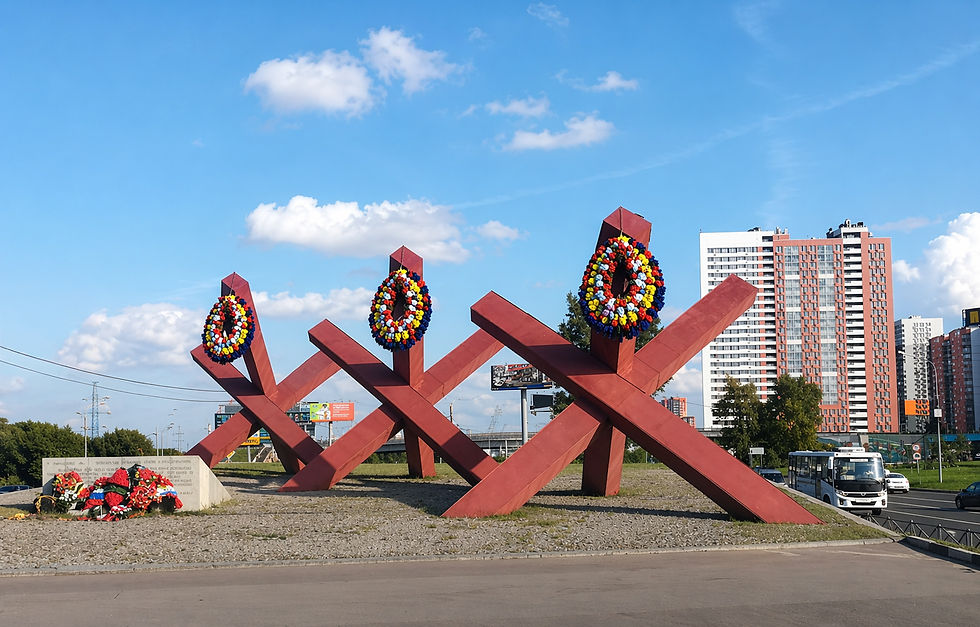
Steel angles rose from the ground, marked with floral wreaths placed by families and veterans. I was stunned at how close the Nazis got to the city.
My first night took me to the Bolshoi Theatre. The hall glowed under its chandeliers and the dancers moved with the control that defines Russian ballet. The performance showed why the Bolshoi remains a national anchor for the arts.
The next morning I walked through the Kremlin and stepped out into Red Square, where the crowds moved past Lenin’s Tomb in a steady line. Across the open space, St. Basil’s Cathedral stood with its bright domes and sharp geometry. The building felt like a symbol carved out of another century.


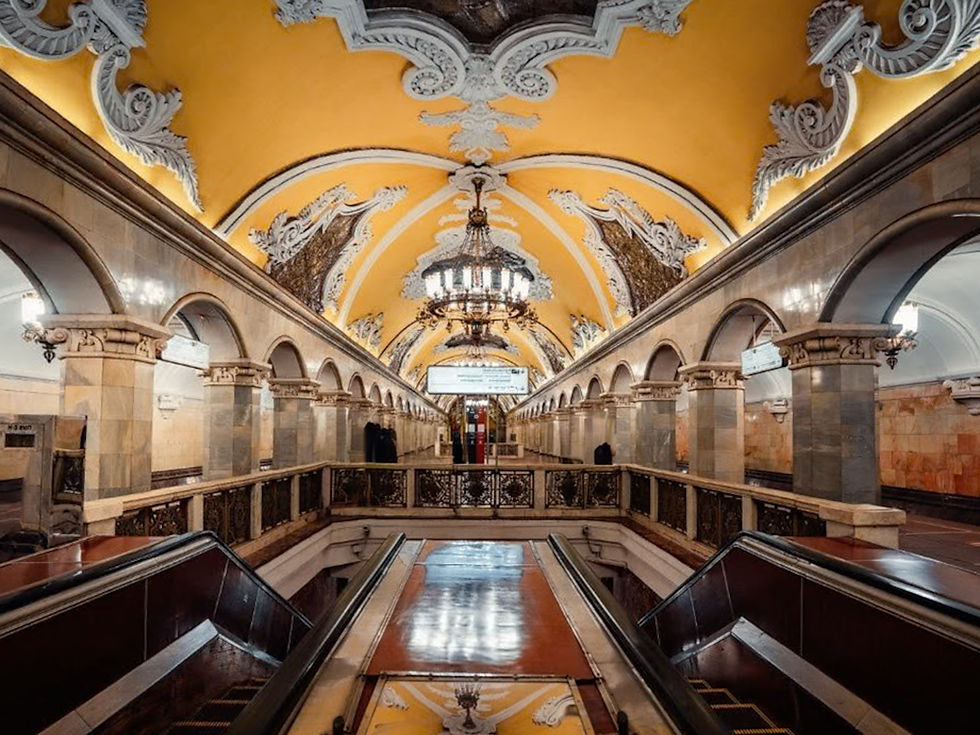
I spent part of the day in the Moscow Metro, where the stations looked like underground galleries. Marble, mosaics, and Soviet-era murals lined the platforms. The system carried the city with speed and precision.
During the week I moved through Moscow’s broader cultural scene. Galleries showed new painters working with strong color and abstract forms. Small theaters staged modern plays with tight staging and direct language. Street performers played near the river. The city carried a steady rhythm of art and entertainment.
Hockey held its own place in the city’s identity. At a local rink, young players ran drills with fast passes and sharp turns. Coaches pushed them through each sequence. Posters of past champions hung in the lobby. The sport felt like a point of national pride that continues to shape the country’s sense of itself.
By the end of the week, Moscow felt like a city built on a past that stands in plain view, while the present keeps pushing forward around it. I think Chekhov and Dostoevsky would agree.


Comments